
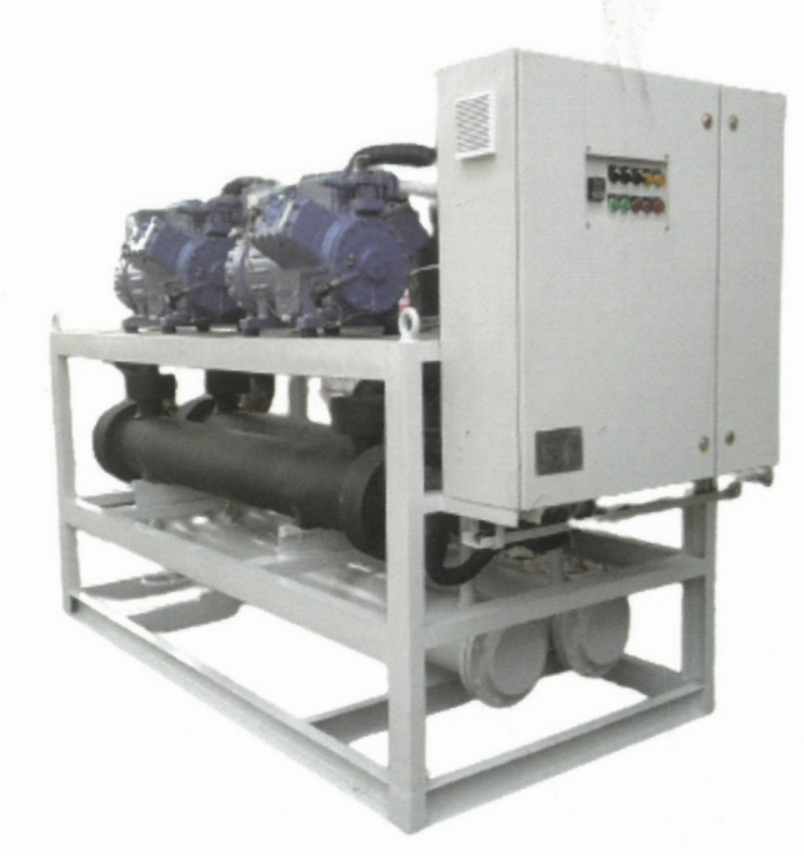
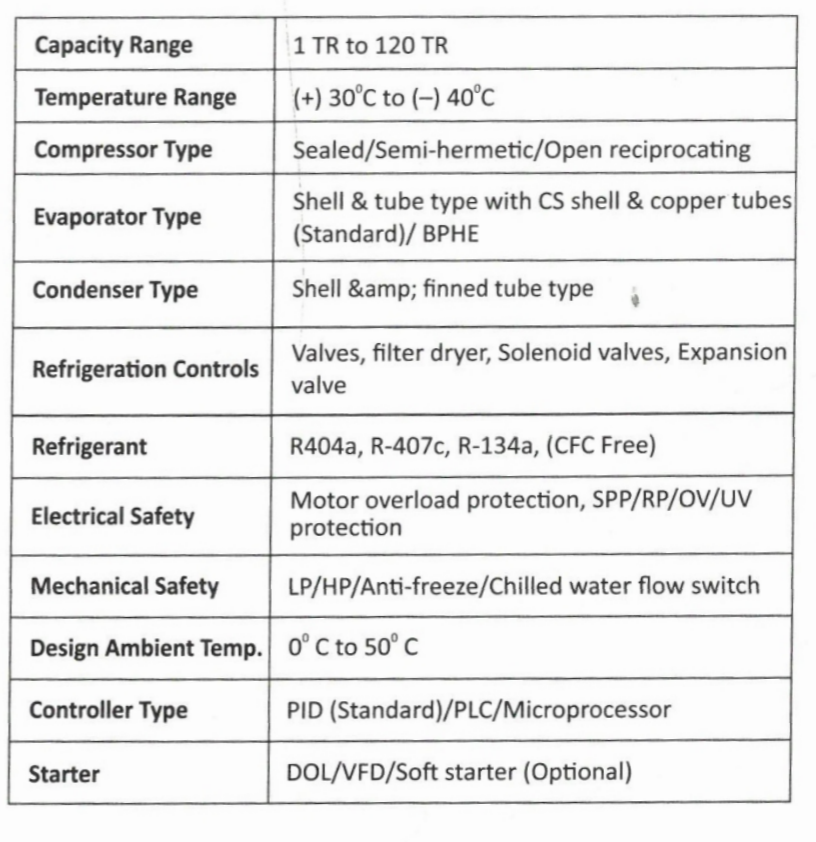
Water-Cooled Reciprocating Chiller
A Water-Cooled Reciprocating Chiller is a high-performance refrigeration system designed to provide efficient and reliable cooling for industrial processes and commercial applications. These chillers use reciprocating compressors and water-cooled condensers to remove heat from the refrigeration system, making them ideal for applications requiring continuous operation and higher cooling efficiencies.
Unlike air-cooled chillers, water-cooled chillers utilize cooling water circulated through a cooling tower or water source to dissipate heat. This results in improved energy efficiency, stable performance, and longer equipment life, especially in large-capacity cooling applications.
At HiTech Sales & Service, we manufacture and supply premium-quality Water-Cooled Reciprocating Chillers engineered for superior performance, durability, and energy savings. Our systems are designed to meet the cooling requirements of various industries, ensuring consistent temperature control and dependable operation.
Features
High-Efficiency Reciprocating Compressor
Water-Cooled Condenser for Enhanced Performance
Energy-Efficient Operation
Robust and Durable Construction
Precise Temperature Control
Low Noise and Vibration Levels
Suitable for Continuous Industrial Operation
Easy Maintenance and Serviceability
Available in Multiple Capacities
Working Principle
A Water-Cooled Reciprocating Chiller operates on the vapor compression refrigeration cycle and consists of four primary components: evaporator, reciprocating compressor, water-cooled condenser, and expansion valve.
1. Heat Absorption (Evaporator)
The chilled water absorbs heat from the industrial process or equipment and transfers it to the refrigerant within the evaporator. As a result, the refrigerant evaporates into a low-pressure vapor.
2. Compression (Reciprocating Compressor)
The low-pressure refrigerant vapor enters the reciprocating compressor, where pistons compress the gas and increase its pressure and temperature.
3. Heat Rejection (Water-Cooled Condenser)
The high-pressure refrigerant gas flows into the water-cooled condenser. Cooling water circulating through the condenser absorbs heat from the refrigerant. The heated water is then directed to a cooling tower, where the heat is released into the atmosphere. As heat is removed, the refrigerant condenses into a high-pressure liquid.
4. Expansion Process
The liquid refrigerant passes through an expansion valve, which reduces its pressure and temperature. This transforms the refrigerant into a cold, low-pressure liquid-vapor mixture.
5. Continuous Cooling Cycle
The cooled refrigerant returns to the evaporator and absorbs heat once again, continuously repeating the cycle to provide a stable supply of chilled water for cooling applications.
Advantages
Higher Energy Efficiency Than Air-Cooled Chillers
Better Performance in High Ambient Temperatures
Lower Operating Costs for Large Installations
Longer Equipment Life
Suitable for Heavy-Duty Industrial Applications
Stable Cooling Performance Throughout the Year
Applications
Plastic Processing Industries
Pharmaceutical Manufacturing Units
Chemical and Petrochemical Plants
Food & Beverage Processing
Dairy and Cold Storage Facilities
Printing and Packaging Industries
HVAC Systems for Commercial Buildings
Textile Industries
Industrial Process Cooling Applications
HiTech Sales & Service offers complete solutions for Water-Cooled Reciprocating Chillers, including manufacturing, installation, commissioning, preventive maintenance, and technical support, ensuring maximum efficiency and long-term reliability for your cooling requirements.