
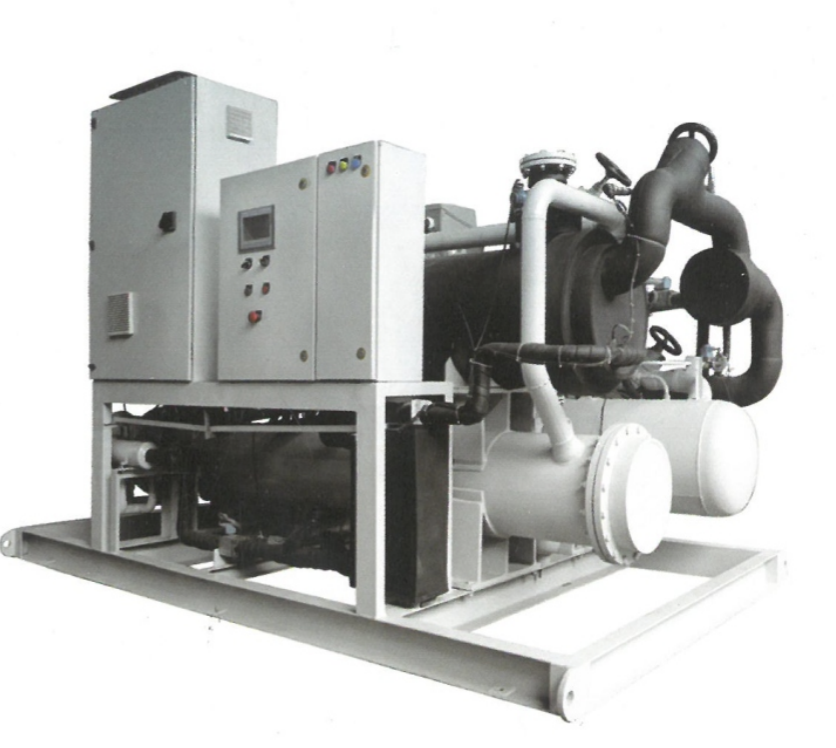
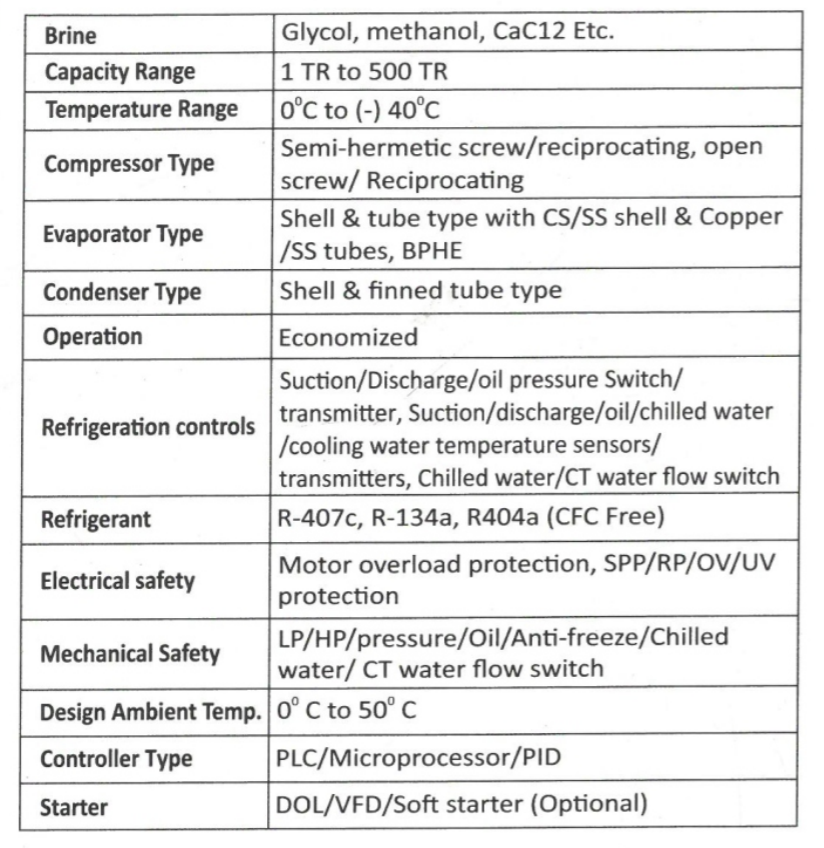
Brine Chiller
A Brine Chiller is a specialized cooling system designed to cool and circulate brine solution (a mixture of water and salt or glycol) at low temperatures for industrial process cooling applications. Unlike conventional chillers that circulate chilled water, brine chillers are capable of achieving sub-zero temperatures without freezing, making them ideal for industries requiring precise low-temperature cooling.
Brine chillers are widely used in food processing, chemical manufacturing, pharmaceuticals, dairy plants, breweries, ice plants, and various industrial processes where maintaining low temperatures is critical for product quality and operational efficiency.
At HiTech Sales & Service, we manufacture and supply high-performance Brine Chillers engineered to deliver reliable, energy-efficient, and continuous cooling solutions. Our systems are designed using advanced refrigeration technology to ensure accurate temperature control, durability, and optimum performance under demanding industrial conditions.
Features
Capable of Achieving Sub-Zero Temperatures
High-Efficiency Refrigeration System
Reliable and Continuous Operation
Precise Temperature Control
Energy-Efficient Performance
Corrosion-Resistant Brine Circulation System
Heavy-Duty Industrial Construction
Easy Maintenance and Serviceability
Available in Customized Capacities
Working Principle
A Brine Chiller operates on the vapor compression refrigeration cycle and uses a refrigerated brine solution as the cooling medium to transfer heat from industrial processes.
1. Cooling of Brine Solution
The brine solution is circulated through the evaporator of the chiller. Inside the evaporator, the refrigerant absorbs heat from the brine, reducing the temperature of the brine to the desired level.
2. Brine Circulation
The chilled brine is pumped through pipelines to the process equipment, storage tanks, or production areas where cooling is required. The brine absorbs heat from the process and becomes warmer.
3. Heat Absorption by Refrigerant
The heat absorbed by the brine is transferred to the refrigerant within the evaporator. As the refrigerant absorbs heat, it evaporates into a low-pressure vapor.
4. Compression Process
The refrigerant vapor enters the compressor, where it is compressed into a high-pressure, high-temperature gas.
5. Heat Rejection
The compressed refrigerant passes through the condenser, where heat is removed by air or water, depending on the condenser type. The refrigerant then condenses into a high-pressure liquid.
6. Expansion Process
The liquid refrigerant passes through an expansion valve, reducing its pressure and temperature before returning to the evaporator.
7. Continuous Cooling Cycle
The refrigeration cycle continuously repeats, maintaining the brine solution at the required temperature and ensuring uninterrupted cooling for industrial applications.
Advantages
Suitable for Low and Sub-Zero Temperature Applications
Prevents Freezing in Cooling Circuits
Excellent Heat Transfer Properties
Reliable and Consistent Cooling Performance
Energy-Efficient Operation
Ideal for Long-Distance Cooling Distribution
Reduced Risk of Process Temperature Fluctuations
Applications
Food Processing Industries
Dairy and Milk Processing Plants
Breweries and Beverage Industries
Ice Manufacturing Plants
Pharmaceutical Industries
Chemical Processing Units
Seafood and Meat Processing Facilities
Cold Storage and Refrigeration Systems
Process Cooling Applications Requiring Sub-Zero Temperatures
HiTech Sales & Service provides complete Brine Chiller solutions, including design, manufacturing, installation, commissioning, maintenance, and technical support. Our systems are customized to meet specific process requirements and deliver dependable low-temperature cooling performance for a wide range of industrial applications.