
Ice Machine
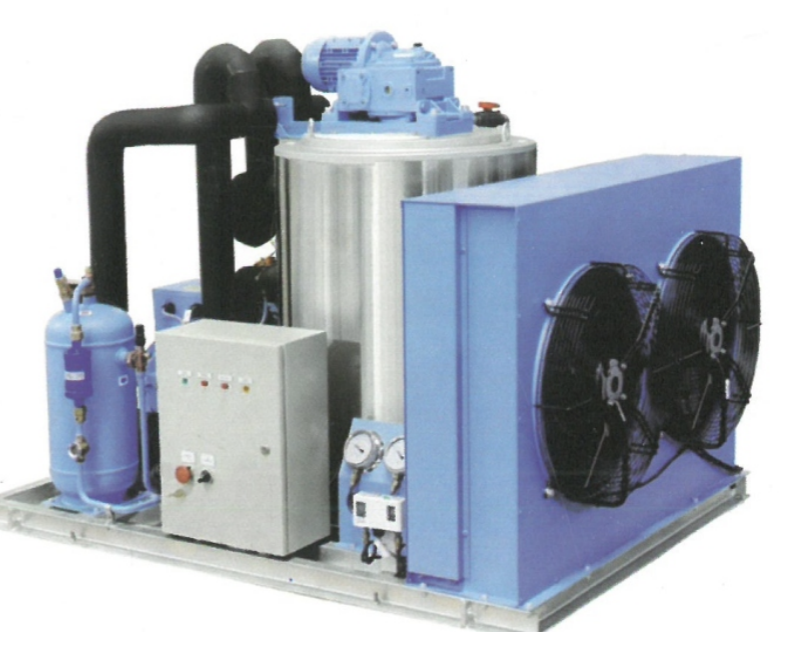
An Ice Machine is an industrial refrigeration system designed to produce ice in large quantities for commercial and industrial applications. It works by freezing water using a refrigeration cycle and forming ice in different shapes such as cube ice, flake ice, tube ice, or block ice depending on the application requirement.
Ice machines are widely used in food preservation, beverage industries, fisheries, chemical processing, concrete cooling, and healthcare applications. They ensure continuous and hygienic ice production to maintain low temperatures and preserve product quality.
At HiTech Sales & Service, we manufacture and supply high-performance Ice Machines engineered for reliable operation, energy efficiency, and consistent ice production. Our systems are designed to meet industrial demands with durable construction and low maintenance requirements.
Features
High Ice Production Capacity
Continuous and Reliable Operation
Energy-Efficient Refrigeration System
Hygienic Ice Production Standards
Available in Cube, Flake, Tube, and Block Ice Types
Robust Industrial-Grade Construction
Easy Operation and Maintenance
Long Service Life
Customized Capacity Options
Working Principle
An Ice Machine operates on the vapor compression refrigeration cycle, where water is frozen by removing heat using a refrigerant-based cooling system.
1. Water Filling Stage
Water is supplied into the ice-forming section of the machine, where it is prepared for freezing in trays, molds, or evaporator surfaces depending on the ice type.
2. Heat Removal (Evaporator Cooling)
The refrigerant circulates through the evaporator, absorbing heat from the water. As heat is removed, the water temperature gradually drops until it begins to freeze.
3. Ice Formation
As the cooling continues, water solidifies into ice on the evaporator surface or inside molds. The refrigeration system maintains controlled temperature conditions to ensure uniform ice formation.
4. Refrigeration Cycle
The refrigerant absorbs heat from the water and evaporates into a low-pressure gas. This gas is then compressed by the compressor into a high-pressure, high-temperature state.
5. Heat Rejection (Condenser)
The hot refrigerant gas passes through the condenser where heat is released into the surrounding air (air-cooled system) or cooling water (water-cooled system). The refrigerant condenses back into liquid form.
6. Expansion Process
The liquid refrigerant passes through an expansion valve, reducing its pressure and temperature before re-entering the evaporator.
7. Ice Harvesting
Once the ice reaches the required thickness or shape, it is released through a harvesting mechanism (depending on machine type) and stored or transported for use.
8. Continuous Production Cycle
The cycle repeats continuously to ensure a steady and uninterrupted supply of ice.
Advantages
Continuous Ice Production
Hygienic and Safe Ice Formation
Low Operating Cost
Energy-Efficient Performance
Suitable for Industrial and Commercial Use
Flexible Ice Types and Sizes
Reliable and Durable Operation
Easy Maintenance and Serviceability
Applications
Food and Beverage Industry
Fisheries and Seafood Storage
Meat Processing Plants
Dairy Industry
Chemical and Pharmaceutical Industry
Concrete Cooling in Construction
Hotels, Restaurants, and Catering
Hospitals and Healthcare Facilities
Cold Storage and Transportation
Why Choose HiTech Sales & Service?
HiTech Sales & Service delivers advanced Ice Machine solutions designed for high efficiency, durability, and continuous performance. Our systems are engineered to meet industrial cooling demands with reliable ice production and low maintenance operation.
We provide complete services including design, manufacturing, installation, commissioning, and after-sales support to ensure uninterrupted and efficient ice production for various industrial applications.