
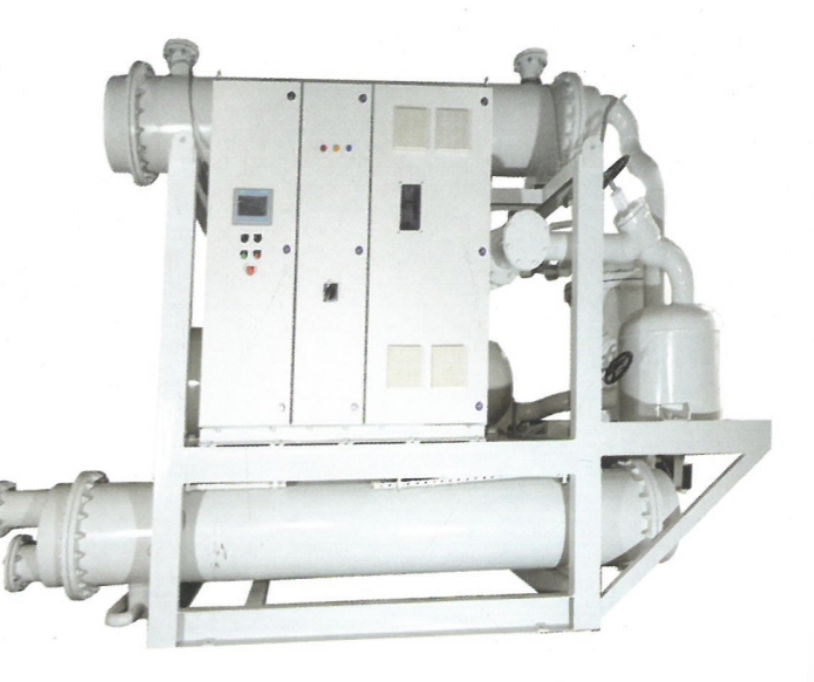
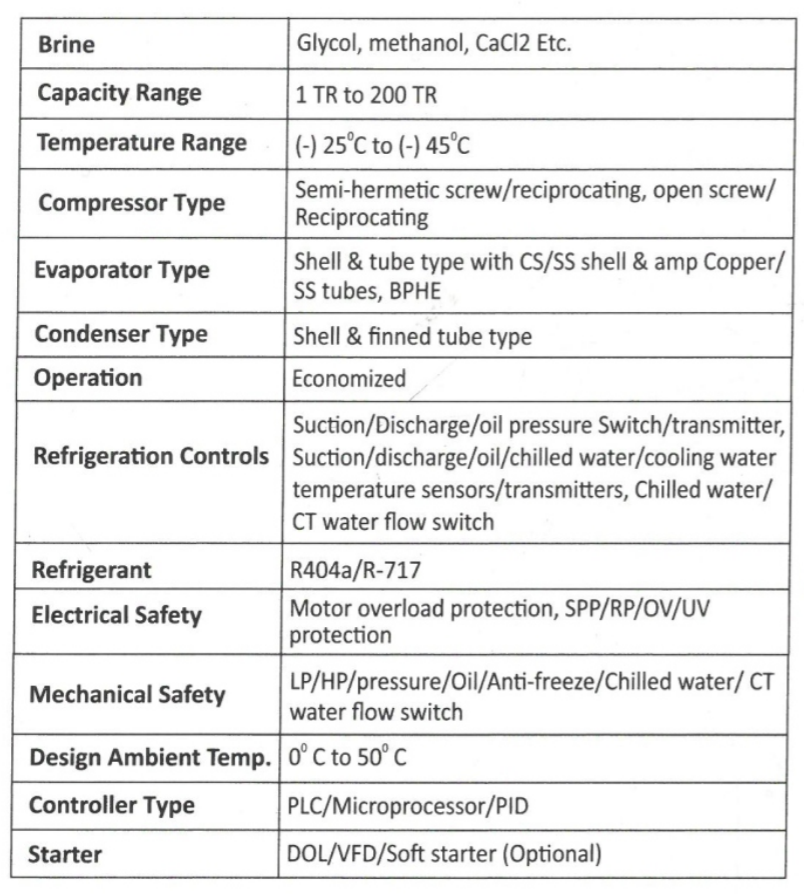
Methanol Chiller
A Methanol Chiller is a specialized low-temperature refrigeration system designed to use methanol as a secondary heat transfer fluid for achieving sub-zero cooling applications. Methanol-based chilling systems are widely used in industries where water or glycol cannot be used due to freezing limitations at very low temperatures.
Methanol acts as an antifreeze medium and enables efficient heat transfer at extremely low temperatures without solidification. This makes methanol chillers ideal for industrial processes that require stable and reliable cooling below 0°C.
At HiTech Sales & Service, we manufacture and supply high-performance Methanol Chillers engineered for precision cooling, energy efficiency, and continuous industrial operation. Our systems are designed to deliver consistent low-temperature performance even under demanding process conditions.
Features
Suitable for Sub-Zero Cooling Applications
High-Efficiency Refrigeration System
Methanol-Based Heat Transfer Medium
Stable Low-Temperature Performance
Reliable Continuous Operation
Energy-Efficient Design
Corrosion-Resistant System Components
Heavy-Duty Industrial Construction
Customizable Capacity Options
Working Principle
A Methanol Chiller operates on the vapor compression refrigeration cycle and uses methanol as a secondary refrigerant to transfer cooling effectively at low temperatures.
1. Refrigeration Cycle Cooling
The primary refrigerant absorbs heat in the evaporator and cools the methanol solution circulating through the system.
2. Methanol Circulation
The chilled methanol is pumped through pipelines to the process equipment where low-temperature cooling is required. It absorbs heat from the process and returns warmer to the chiller.
3. Heat Exchange Process
Inside the evaporator, heat from the methanol is transferred to the refrigerant, causing the refrigerant to evaporate into a low-pressure vapor.
4. Compression Stage
The refrigerant vapor is compressed by the compressor into a high-pressure, high-temperature gas.
5. Heat Rejection
The refrigerant passes through the condenser where heat is removed using air or water cooling, converting it back into a high-pressure liquid.
6. Expansion Process
The liquid refrigerant expands through an expansion valve, reducing pressure and temperature before returning to the evaporator.
7. Continuous Cooling Cycle
The system continuously circulates chilled methanol to maintain stable sub-zero temperatures for industrial applications.
Advantages
Excellent Performance at Sub-Zero Temperatures
Prevents Freezing in Cooling Circuits
High Heat Transfer Efficiency
Stable and Reliable Operation
Suitable for Long-Distance Cooling Distribution
Energy-Efficient System Design
Ideal for Critical Low-Temperature Processes
Reduced Risk of Temperature Fluctuations
Applications
Pharmaceutical Manufacturing
Chemical Processing Industries
Food Processing and Freezing Systems
Beverage and Brewery Industries
Ice Plants and Cold Storage
Laboratory and Research Applications
Industrial Low-Temperature Testing
Specialty Chemical Production
Process Cooling Below 0°C
Why Choose HiTech Sales & Service?
HiTech Sales & Service provides advanced Methanol Chiller solutions designed for precise low-temperature control and reliable industrial performance. Our systems are engineered to deliver consistent sub-zero cooling with high efficiency and durability.
We offer complete services including design, manufacturing, installation, commissioning, and maintenance support to ensure uninterrupted operation and optimal performance of methanol-based cooling systems.